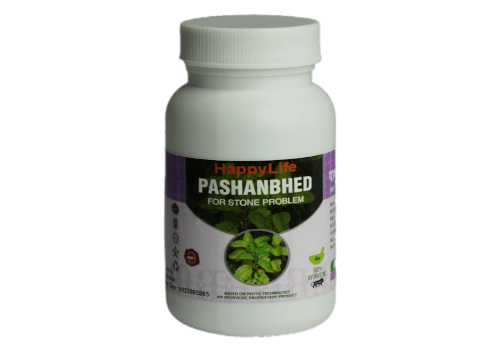
The literal meaning of word Pashanbheda is, one that breaks stones (Pashan is stone and bheda means to break, in Sanskrit). There are many plants that are known by this name due to their diuretic and lithotriptic (dissolving or destroying stone in the bladder or kidneys) activities. One such plant that is widely accepted under the name Pashanbheda (Bergenia ligulata) is Bergenia ligulata syn - Saxifrega ligulata. This medicinal plant is useful in treatment of many ailments but particularly for urinary calculi. Pashanbheda herb is found in Himalaya and the Khasi hills Assam. The rhizomes of this plant are used to prevent and expel urinary stones.
| Anti-uroholic | |
| Diuretic | |
| Hepatoprotective | |
| Anti-diabetic | |
| Blood pressure lowering activity | |
| Antipyretic |
1 or 2 capsules once or twice a day with plenty of water.
| Phyto Extract | In each capsule | |
| Pashanbheda (Bergenia ligulata) | 500 mg |
| Roots of the plant can be rubbed and given with honey for children who are teething. | |
| Wounds, boils, burns and cuts can be healed by using the dried root paste of Pashanbhed externally. | |
| Pashanbhed can be taken orally for getting rid of intestinal parasites and roundworms. | |
| Its leaves can be used in the form of an ear drop for curing earache | |
| Pashanbhed can be used for treating urinary disorders, urogenital disorders and stomach disorders. | |
| It helps in curing constipation. | |
| Pashanbheda is effective in treating fever. |